

The sale may be years away. The relationship doesn’t have to be. The Long Before – 003
 Written by Gaurav MehrotraOctober 12, 2026
 Someone accepts your LinkedIn connection request today.
They look relevant. Right industry. Right kind of role. Somewhere within the broader professional world your business serves.
But there is no reason to sell to them.
They don’t have an obvious need. You don’t know enough about their situation. Perhaps there isn’t even a reason to start a conversation.
So nothing commercial happens.
And perhaps that’s exactly as it should be.
Because in B2B, the absence of a commercial conversation doesn’t necessarily mean nothing is happening.
What happens in between?
B2B sales cycles can be long.
But there is another period we talk about far less.
The time before the sales cycle even begins.
Someone enters your professional world today. Six months from now, they may see a post you’ve written about a problem in their industry.
Later, perhaps a comment you leave on someone else’s post.
A short video.
An observation from your work.
A client outcome.
An edition of your LinkedIn newsletter.
Perhaps they follow something through to your website and find an article, a podcast, a case study or a deeper piece of thinking.
None of this means they are becoming a buyer.
They may not be paying much attention at all.
But your expertise is there to be experienced.
And over a year or two, that can matter.
Because relevance moves
The person who wasn’t commercially relevant when you connected doesn’t remain frozen in time.
They change jobs.
Get promoted.
Take responsibility for something new.
Their company enters another market.
A problem that didn’t exist eighteen months ago becomes important.
And you don’t remain static either.
Your expertise develops.
Your company builds new capabilities.
Your offer changes.
You begin solving a problem you weren’t solving when the two of you first connected.
Someone who wasn’t right for one offer may be exactly right for another.
This is one reason an experienced B2B founder’s network is difficult to understand simply by looking at a list of connections.
The people may be the same.
The relevance isn’t.
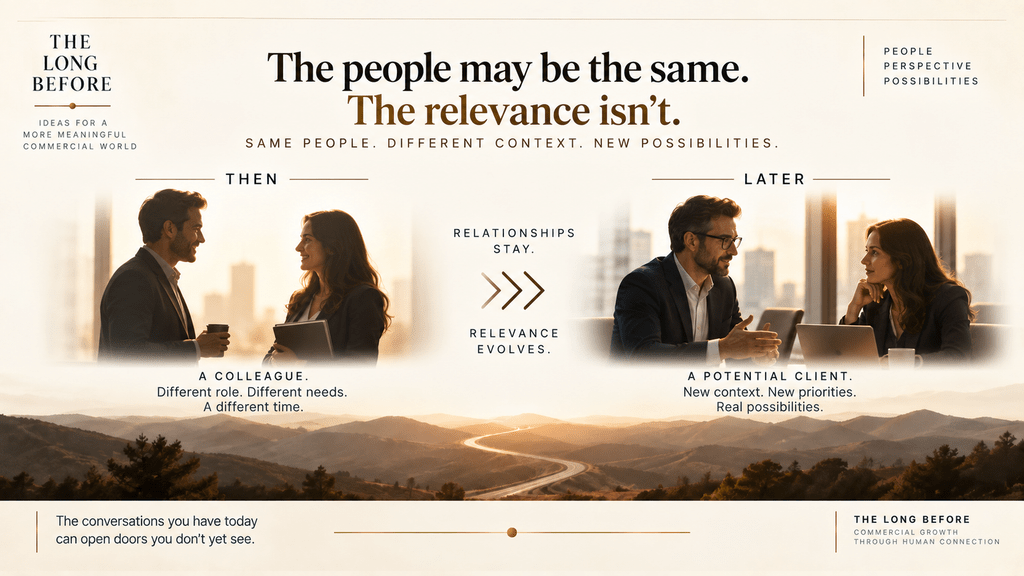
Visual thought: “The people may be the same. The relevance isn’t.” Role: a small, restrained visual pause reinforcing changing context and relevance without introducing a new argument.
And neither is the context
Imagine two people who fit your ICP today.
One connected with you yesterday.
The other connected eighteen months ago.
Technically, LinkedIn calls both first-degree connections.
But they may not be starting from the same place.
The second person may have seen your thinking repeatedly.
They may recognize your name.
They may have watched a video, read an article or noticed the kinds of conversations you participate in.
Perhaps they already have some impression of what you know.
Or perhaps not.
Perhaps they have barely noticed you for eighteen months.
Then you send them a message that is genuinely relevant to something happening in their world.
Now they look.
They visit your profile.
Read two or three recent posts.
Watch a video.
See that you publish a newsletter.
Visit your website.
Read an article.
Look at your company and your work.
Something that accumulated over eighteen months can suddenly become useful in twenty minutes.
That matters too.
Because your expertise doesn’t have to be experienced only as you publish it.
It can also be there waiting to be discovered when somebody finally has a reason to care.
This changes the value of the network
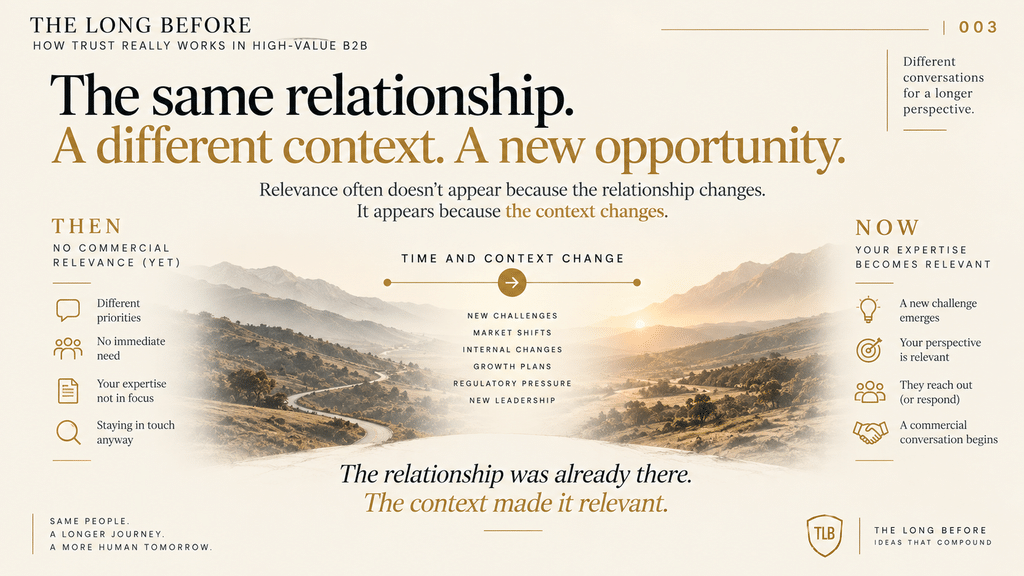
It is tempting to look at a professional network mainly in terms of who might be useful today.
Who fits the current ICP?
Who has an immediate problem?
Who should sales contact?
But perhaps that is too narrow for long-cycle B2B.
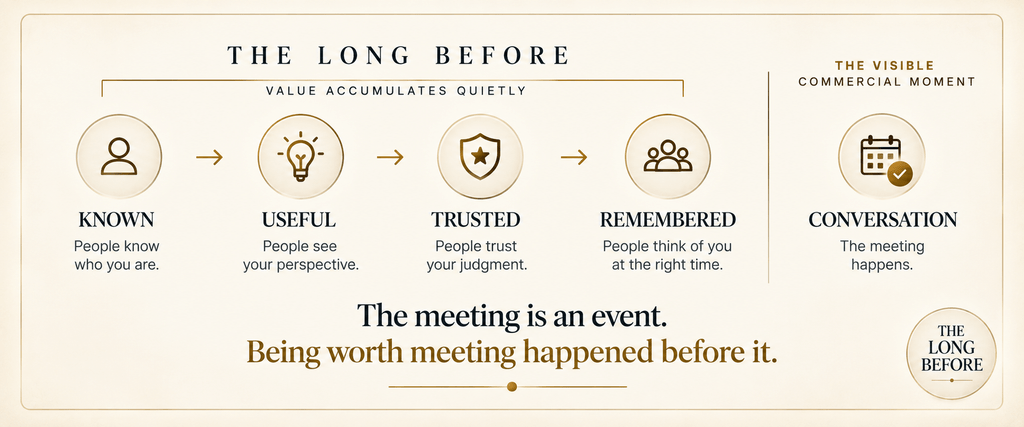
There is value in continuing to bring the right people into your professional world before they are ready for a commercial relationship.
Not everybody.
Not because every connection is a future prospect.
But because waiting until someone has visible buying intent before beginning any professional proximity means starting very late.
LinkedIn is particularly useful here.
It lets B2B leaders continuously add relevant people to their professional world while also remaining visible to them without having to continuously sell to them.
Posts are part of that.
But so are comments, conversations, video, newsletters and the profile itself.
And beyond LinkedIn sit the website, articles, blogs, podcasts, client evidence and other places where a person can go deeper when they choose to.
The network keeps growing.
The body of expertise keeps growing.
And commercial relevance moves around inside it.
This is not the same as saying an old connection is a warm lead
Time doesn’t create trust.
A connection isn’t a relationship.
Visibility isn’t credibility.
And someone can know exactly who you are and still have no reason whatsoever to buy from you.
There is no case here for suddenly prospecting everyone you’ve connected with over the past twenty years.
But there may be a case for thinking differently about what happens before someone becomes commercially relevant.
Because when that moment eventually arrives, two things can matter.
Who is already in your professional world.
And:
What is already there for them to experience when they look.
That makes continually building a relevant network and continually sharing earned expertise less separate than they first appear.
Both are creating conditions for a commercial moment that may not exist yet.
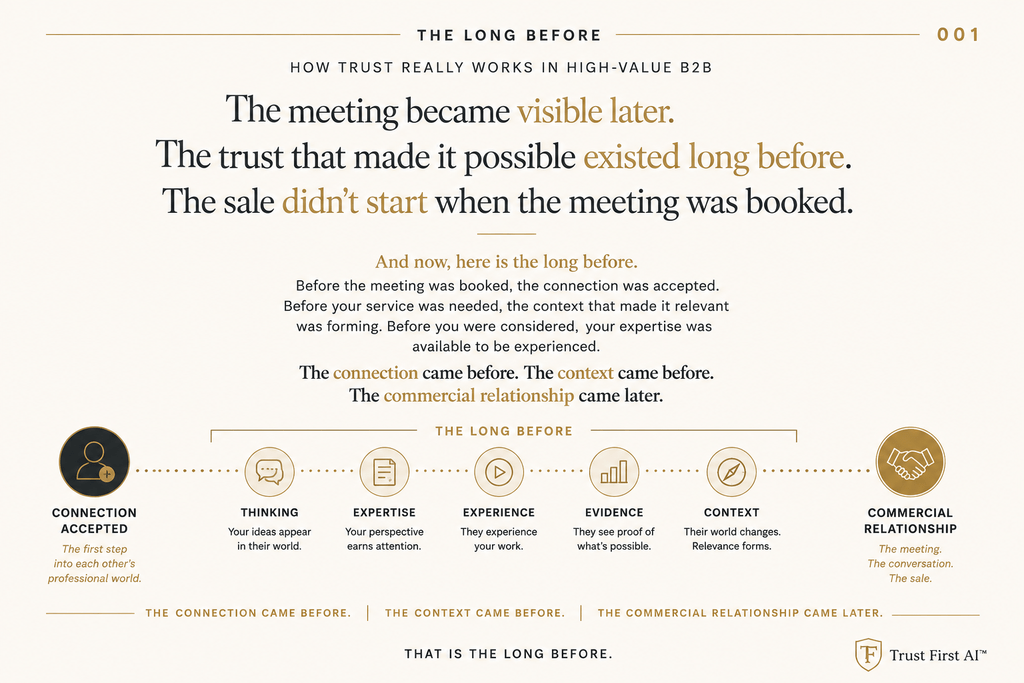
And now, here is the long before.
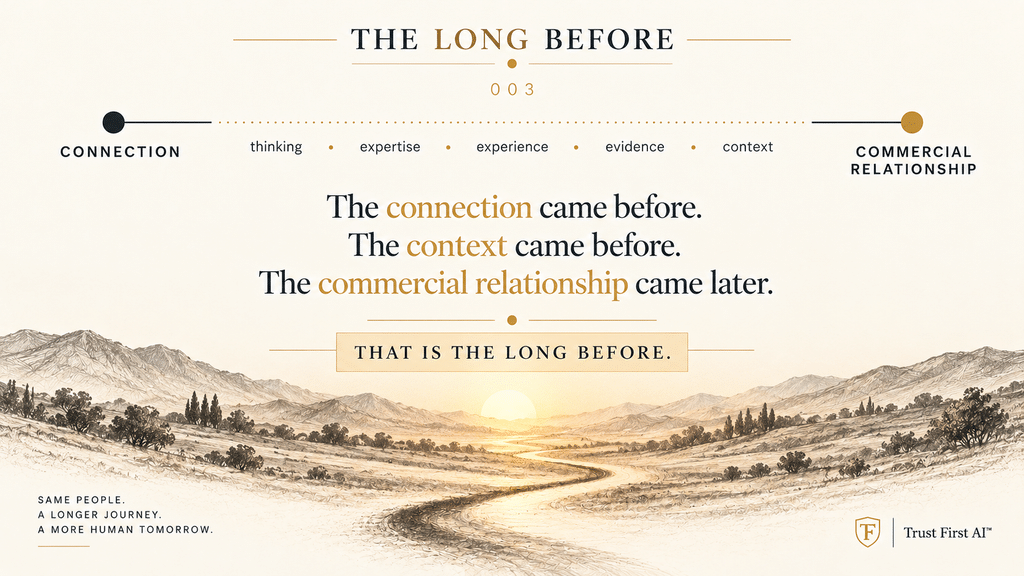
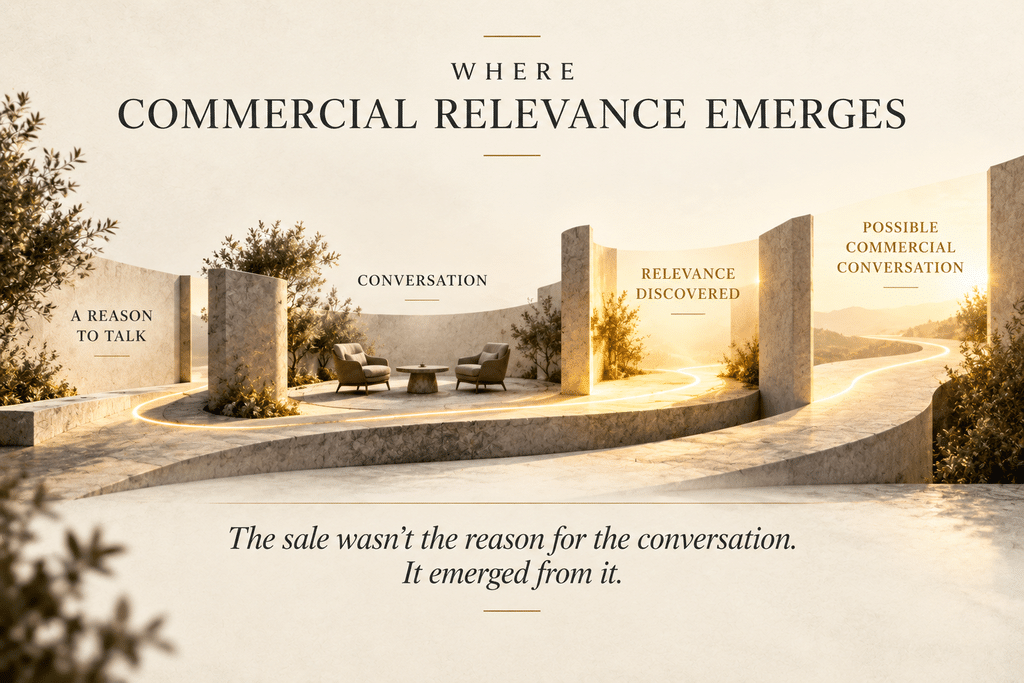
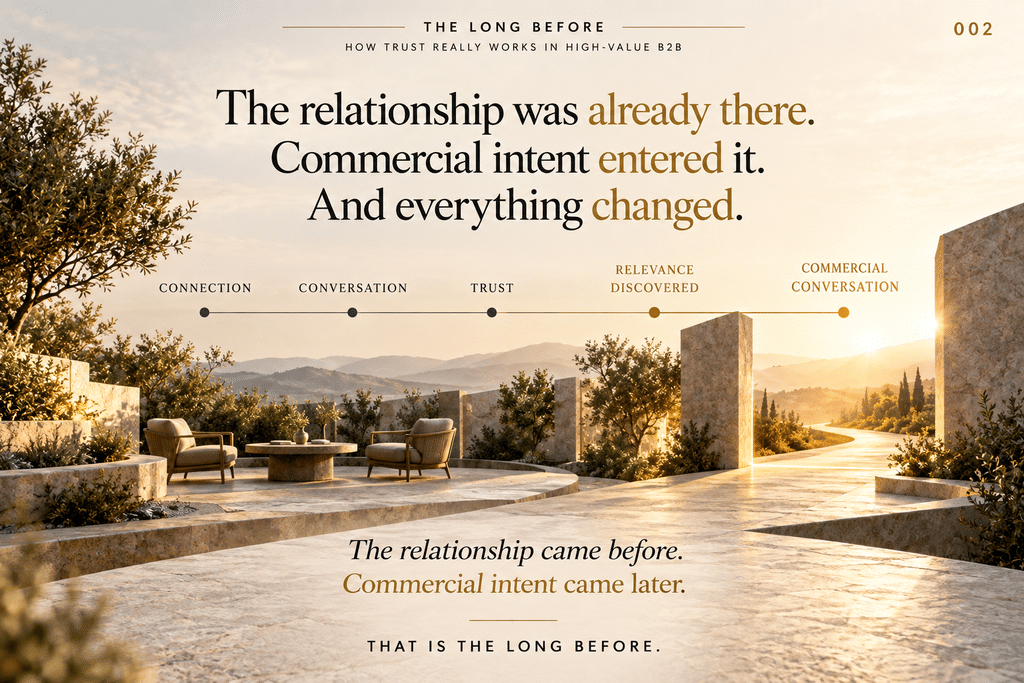
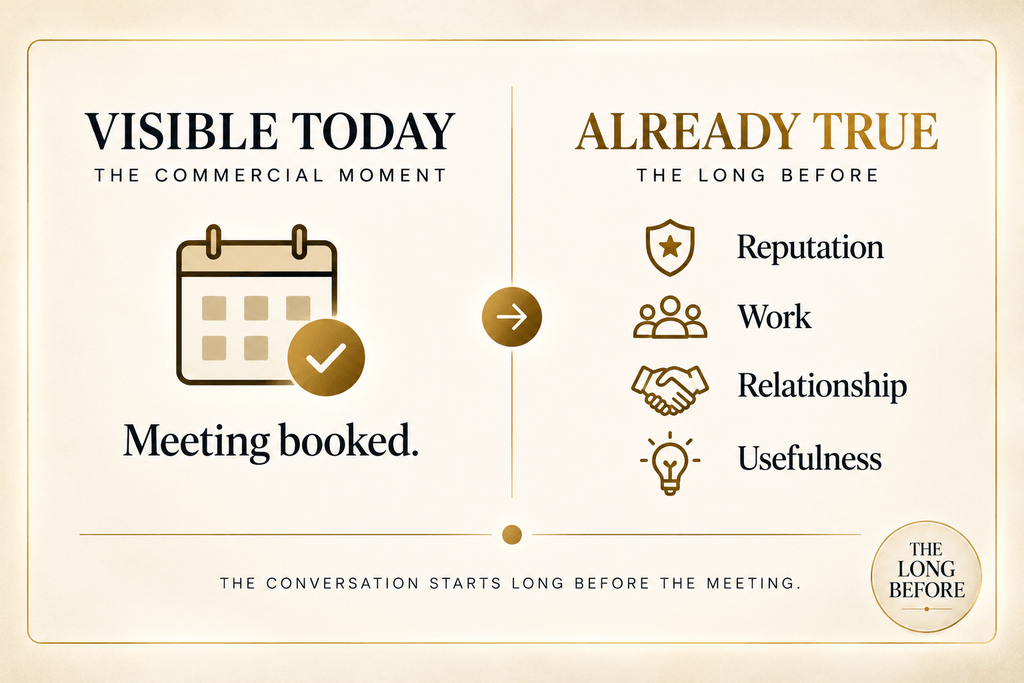
The commercial relationship may begin today.
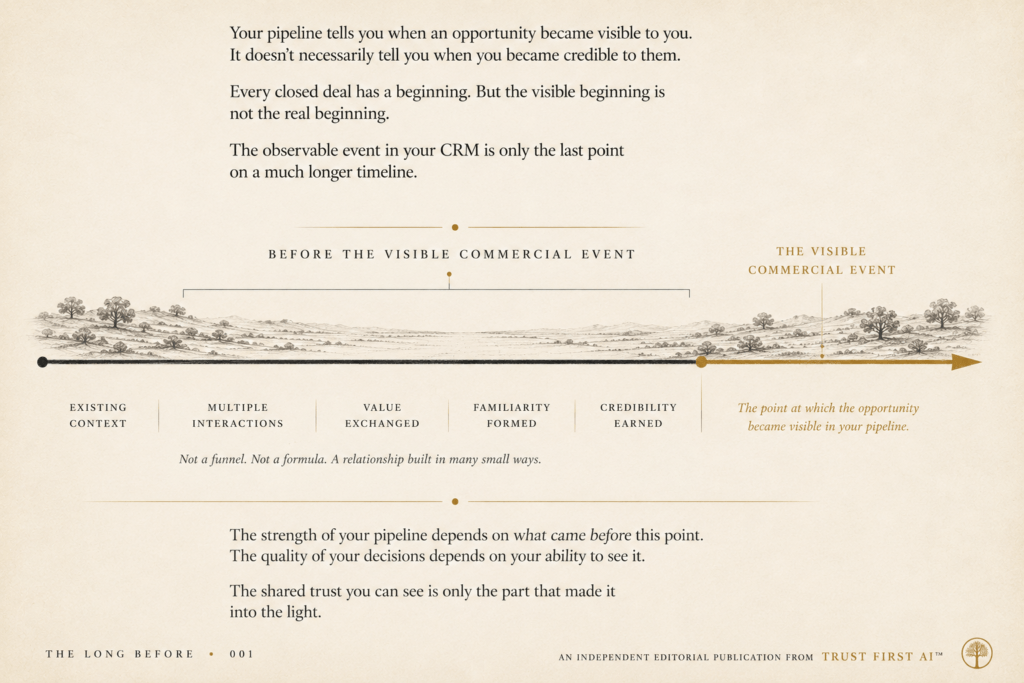
But the person on the other side may have entered your professional world months or years ago.
In between, they may have experienced your thinking as it appeared. Or they may discover it only when relevance finally gives them a reason to look.
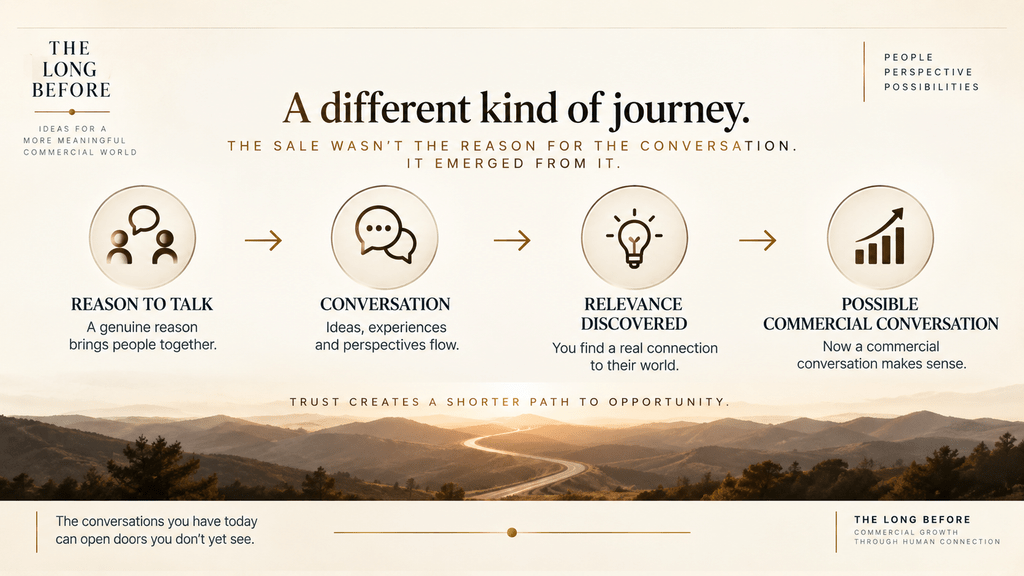
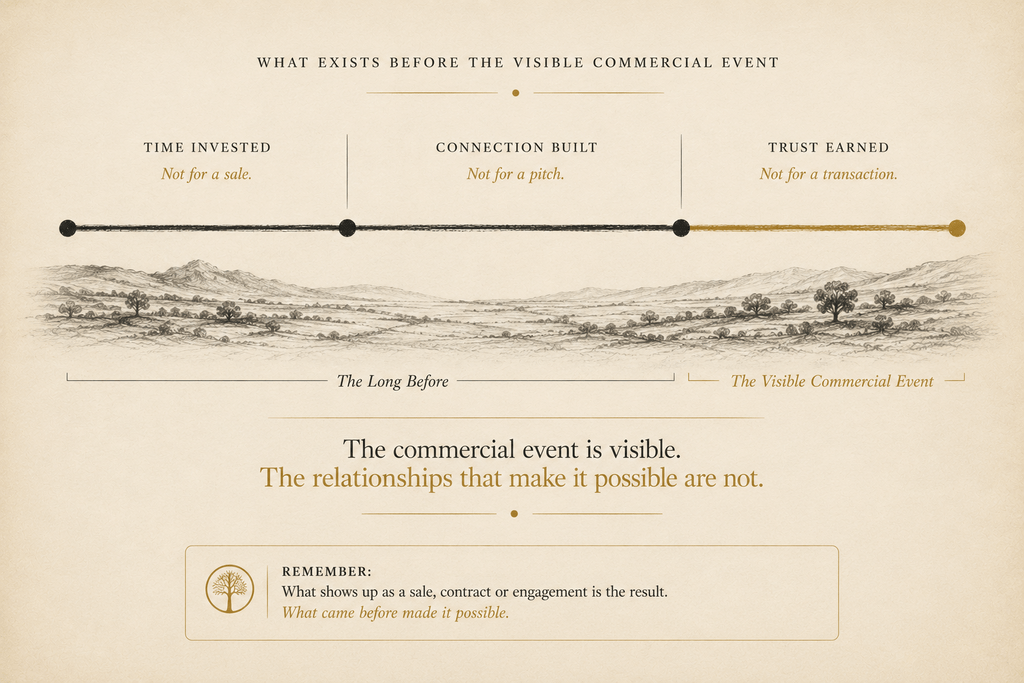
The connection came before. The context came before. The commercial relationship came later.
That is the long before.
Participation Poll
What have you experienced?
Issue 003 is about the time between professional proximity and commercial relevance.
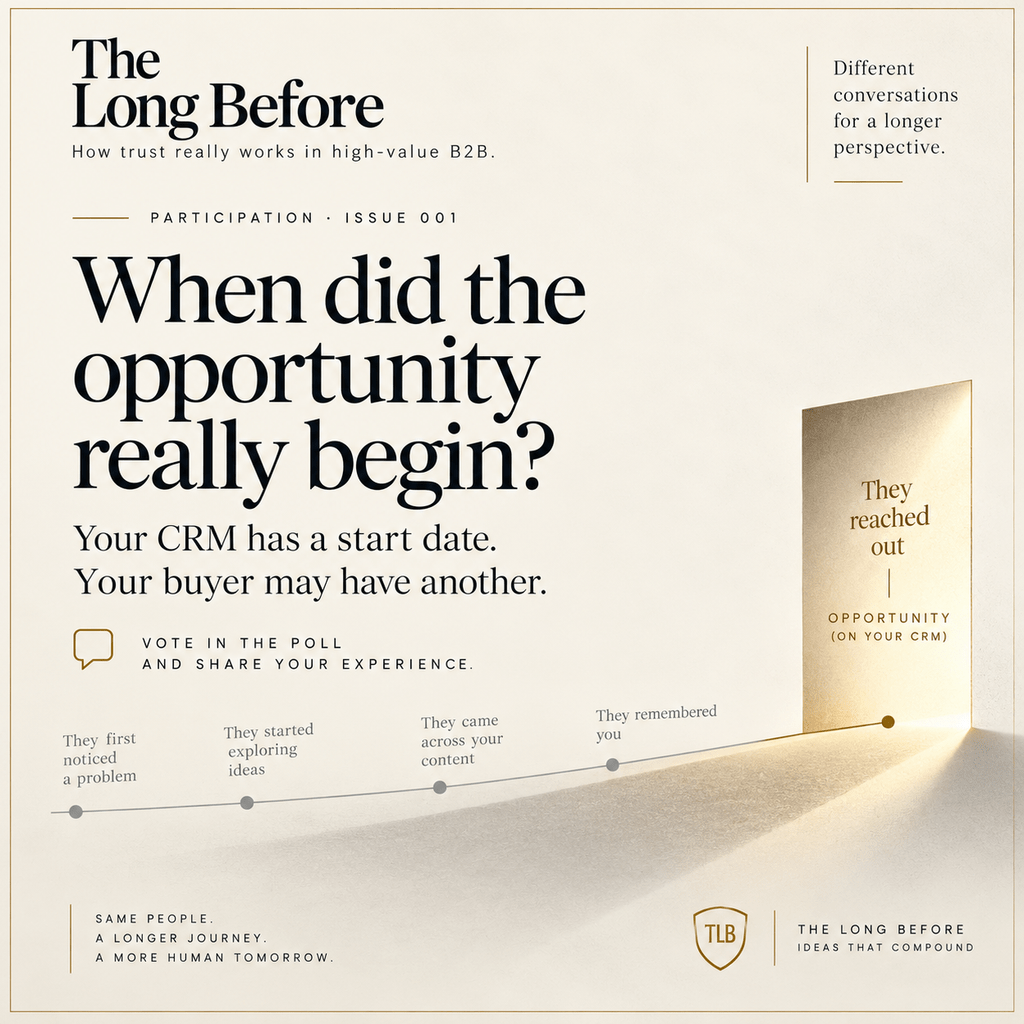
That period can be almost invisible from inside a CRM. But for the people involved, it may contain months or years of recognition, changing context, accumulated expertise and occasional interaction before there is any reason to talk about business.
So I would like to compare that argument with your own experience.
Think about the last B2B relationship that eventually became meaningful business. How long was it between first entering each other’s professional world and the relationship becoming commercial?

Join the conversation and vote in the live LinkedIn poll → https://lnkd.in/p/gauSFkes